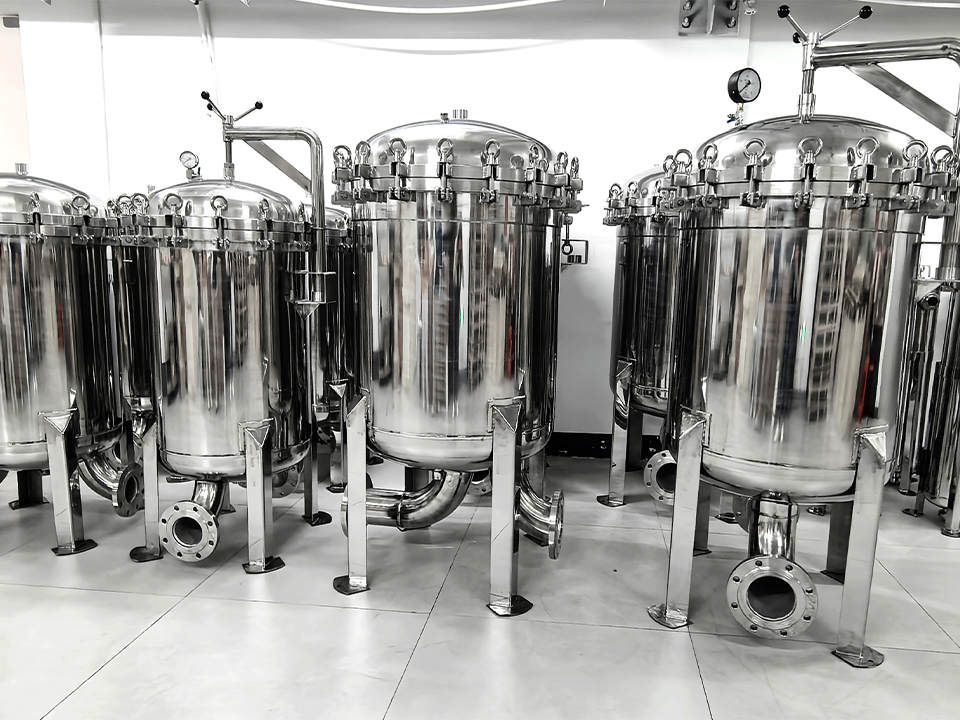
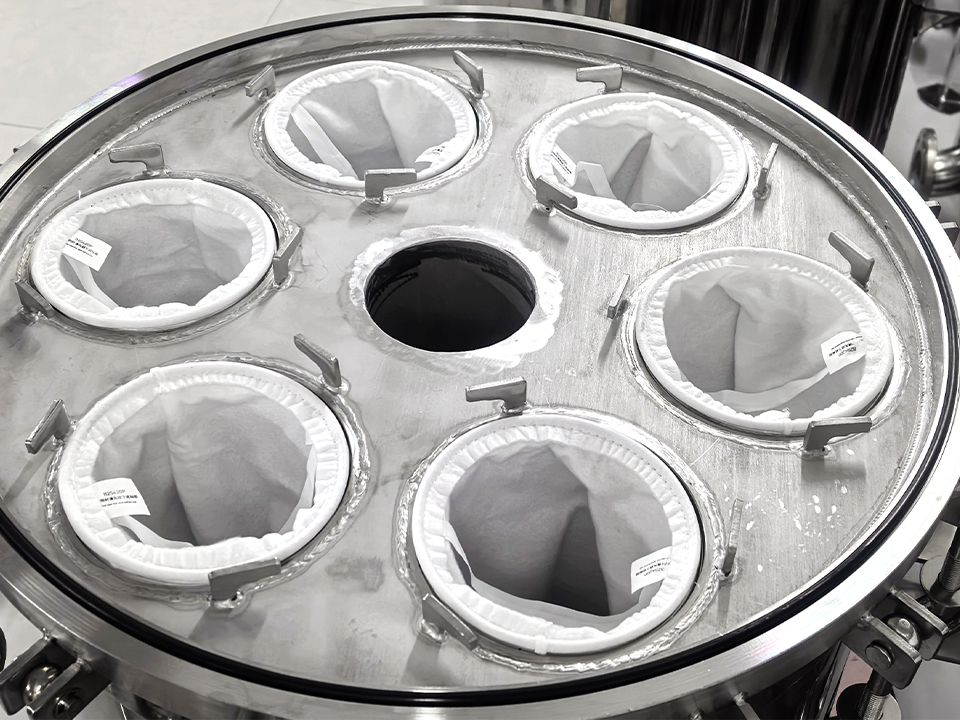
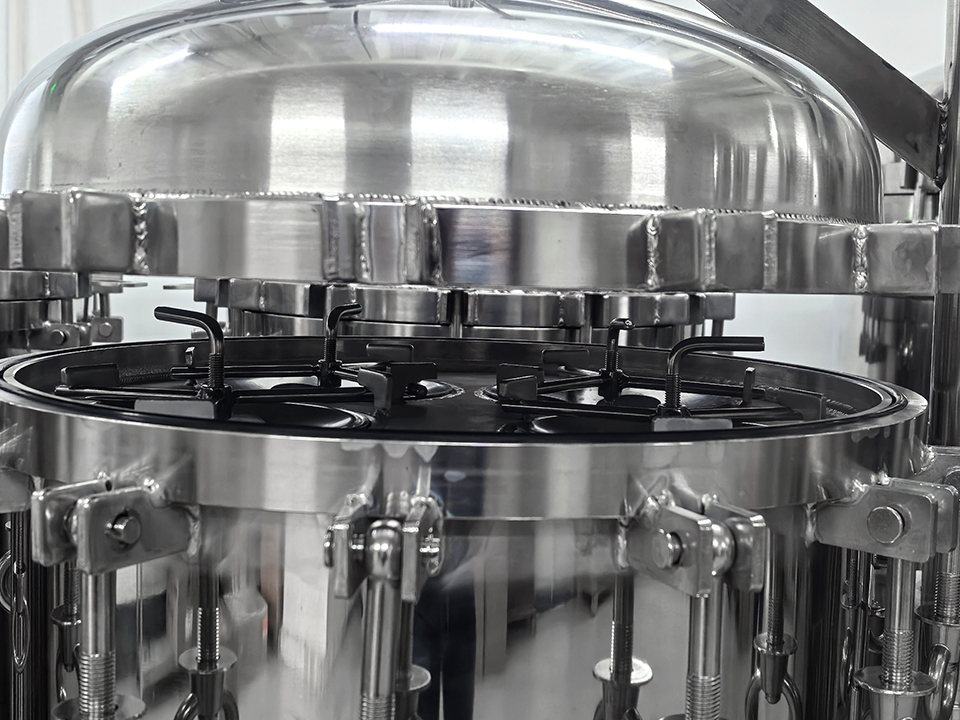
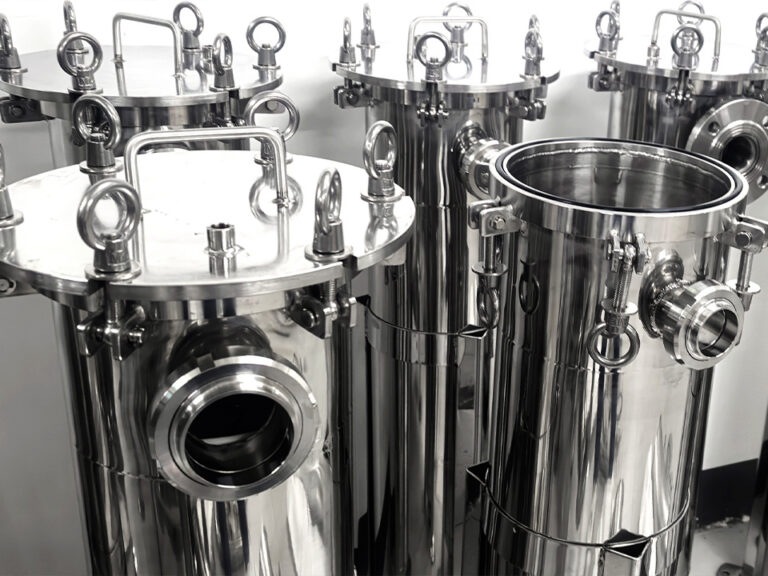
Guangzhou Lvyuan Water Purification Equipment Co., Ltd. es un fabricante de filtros industriales fundado en 2009 que diseña y fabrica carcasas de filtros de acero inoxidable, depósitos de agua estéril de acero inoxidable, elementos filtrantes, bolsas filtrantes, materiales ultrapolímeros y productos de filtros sinterizados. Los compradores eligen Lvyuan por el soporte OEM/ODM, el control de calidad ISO9001 y las certificaciones multinacionales.
Selección de carcasas de filtro para la filtración de productos alimenticios viscosos
La viscosidad lo cambia todo.
Un envase que parece tener unas dimensiones generosas en una ficha técnica teórica puede convertirse en un cuello de botella en la fabricación cuando la pasta de tomate, la miel, el puré de fruta, el licor de chocolate, el jarabe de glucosa, la leche concentrada o la salsa espesada con almidón llegan a la línea de producción a su temperatura real de procesamiento.
Entonces, ¿por qué los clientes siguen comparando las tasas de circulación nominales como si todos los productos se comportaran como el agua?
Mi opinión sincera es que el sector alimentario dedica demasiado tiempo a hablar de valores nominales en micras y muy poco a medir el espesor, la carga de sólidos, el nivel de temperatura, la presión diferencial y el tiempo de limpieza. El equipo se trata como si fuera un recipiente metálico. Pero no lo es. Es un recipiente a presión, una barrera sanitaria, una tarea de mantenimiento y, en algunos casos, una fuente oculta de variabilidad entre lotes.
Las repercusiones no son meramente teóricas. Los datos de los CDC correspondientes a 2023 mostraron que la incidencia de ocho infecciones de origen alimentario en general aumentó o se mantuvo estable en comparación con los valores de referencia del periodo 2016-2018. Las cifras preliminares de FoodNet para 2024 registraron 24 624 infecciones, 6 746 hospitalizaciones y 178 fallecimientos; 841 TP3T de las infecciones notificadas se contrajeron en el país. El filtrado no puede modificar el tratamiento térmico, la limpieza, los controles de sustancias irritantes ni los controles preventivos validados, pero un equipo mal diseñado puede seguir generando problemas que debiliten todo el sistema de seguridad alimentaria.
Por qué los alimentos viscosos ponen de manifiesto los errores en la elección de la carcasa del filtro
El agua disimula los errores.
Los productos de gran espesor los dejan al descubierto porque la pérdida por tensión aumenta con el espesor, los recorridos de flujo se vuelven menos flexibles, los sólidos se acumulan en las aberturas más pequeñas y los residuos que quedan en las tapas, los orificios de ventilación, las ranuras de sellado o los huecos de drenaje resultan más difíciles de eliminar.
En los sistemas con especificaciones muy estrictas se observan de forma sistemática una serie de patrones de fallo:
El filtro «Tidy» se activa cuando la presión diferencial es demasiado alta.
La circulación se interrumpe a mitad del lote.
Los sólidos blandos obstruyen un cartucho que había funcionado bien en una prueba con agua.
Una bomba de desplazamiento positivo comprime o rompe el medio filtrante.
Los operadores eluden los filtros para cumplir con el calendario de carga.
El inmueble no se puede vaciar por completo, ya que quedan restos de productos comerciales y residuos de limpieza.
Las juntas se hinchan, se endurecen o absorben compuestos aromáticos.
Un recipiente “higiénico” requiere rascar con las manos por los salientes interiores.
Eso último es un problema. Un exterior pulido y una conexión Tri-Clamp no garantizan por sí solos la higiene de un local.
El marco de controles preventivos de la FDA exige que los centros identifiquen los peligros biológicos, químicos y físicos y establezcan controles adecuados al proceso. El borrador de directrices de la agencia, de enero de 2024, distingue además los peligros físicos, los programas de limpieza, la detección y la preparación para la retirada del mercado como áreas de control específicas. En pocas palabras, la adquisición de un filtro no exime al procesador de su responsabilidad más amplia de identificar qué puede salir mal.
Empieza por el artículo, no por el catálogo de envases
Sin duda rechazaría cualquier propuesta de carcasa de filtro que se presentara sin que el distribuidor haya solicitado previamente la siguiente información:
Nombre y fórmula del producto de uso doméstico
Viscosidad al nivel de temperatura de filtrado más bajo previsto
Tanto si el producto es newtoniano, de fluidez por cizallamiento o tixotrópico
Se solicita la cantidad del lote y el precio por volumen
Tiempo máximo de tramitación permitido
Tipo, forma y concentración de los sólidos retenidos
Objetivo obligatorio de eliminación de contaminantes
Pérdida máxima permitida del producto
Presión de entrada y tipo de bomba disponibles
Técnicas de limpieza, productos químicos, niveles de temperatura y frecuencia de los cambios de producción
La viscosidad debe tenerse en cuenta en relación con la temperatura y los problemas de cizallamiento. La indicación “5.000 cP” es incompleta si el producto presenta una viscosidad de 5.000 cP a 60 °C, pero llega al filtro a 35 °C tras un retraso en la producción.
Y los productos no newtonianos complican aún más las cosas. El ketchup, la mayonesa, el yogur, los preparados de fruta y los sistemas con almidón pueden volverse mucho menos viscosos bajo cizallamiento, para luego recuperar su estructura una vez que se elimina dicho cizallamiento. Un único valor de viscosidad obtenido en laboratorio no puede definir por sí solo toda la relación entre presión y flujo.
A título de referencia, 1 cP equivale a 1 mPa · s. El agua tiene una viscosidad cercana a 1 cP a temperatura ambiente, mientras que la miel, los concentrados, las pastas y las soluciones pueden ser cientos o miles de veces más viscosos. Esa diferencia puede convertir una vivienda con un consumo nominal de 10 m TWO/h en una fuente de frustración con un consumo de 1 m TWO/h.
Filtro de mangas frente a filtro de cartucho para líquidos viscosos
Aquí es donde la documentación comercial se vuelve un poco engañosa.
Los filtros de bolsa suelen ser más tolerantes con los llenados con alto contenido en sólidos y con partículas más grandes y deformables. Las carcasas de cartucho suelen ofrecer alternativas de retención más estrictas, una geometría de los componentes más repetible y, posiblemente, una mayor fiabilidad cuando se utilizan medios plisados. Ninguno de los dos tipos destaca de forma especial.
Elige un filtro de mangas higiénico cuando:
La densidad de los sólidos es de moderada a alta.
La retención del objetivo es relativamente gruesa.
Hay fibras, pulpa, aglomerados, pieles o fragmentos blandos.
Es prioritario que la disminución de la tensión inicial sea mínima.
Los operadores necesitan un sustituto rápido y económico de los soportes tradicionales.
Es importante recuperar los elementos de la herramienta de filtrado.
Elige una carcasa para cartucho cuando:
La uniformidad de la retención es más importante que la capacidad de retención de suciedad.
De hecho, el producto ya ha sido sometido a una prefiltración preliminar.
El proceso requiere una clasificación específica de «directo» o de «alta eficiencia».
La fabricación de cartuchos tiene en cuenta factores como la temperatura, la grasa, los ácidos, el alcohol y los productos químicos de limpieza.
Se pueden instalar numerosos cartuchos sin que ello dé lugar a espacios interiores inaccesibles.
A carcasa de filtro de acero inoxidable de un solo cartucho puede adaptarse a lotes piloto, flujos de ingredientes, operaciones de bajo caudal o purificación en el punto de uso. El propio fabricante señala que los productos con alta viscosidad o con una elevada carga de impurezas pueden requerir una prefiltración, lo cual es una recomendación válida que, con frecuencia, se pasa por alto.
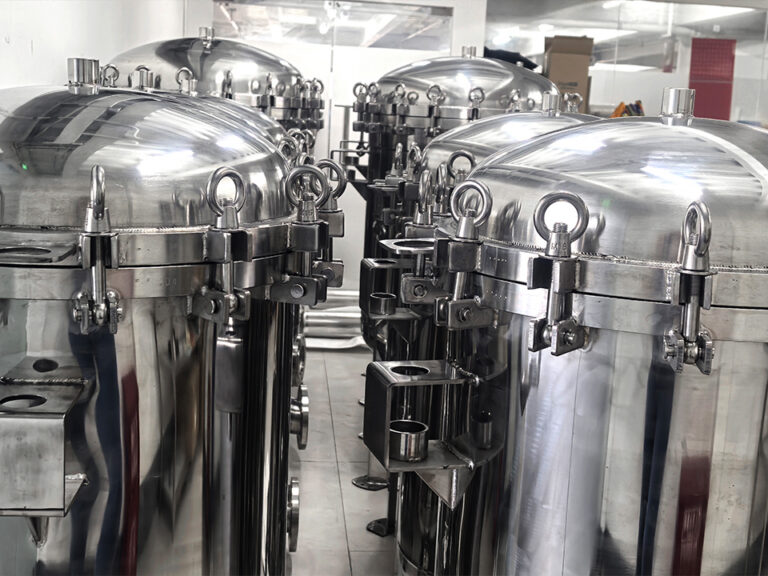
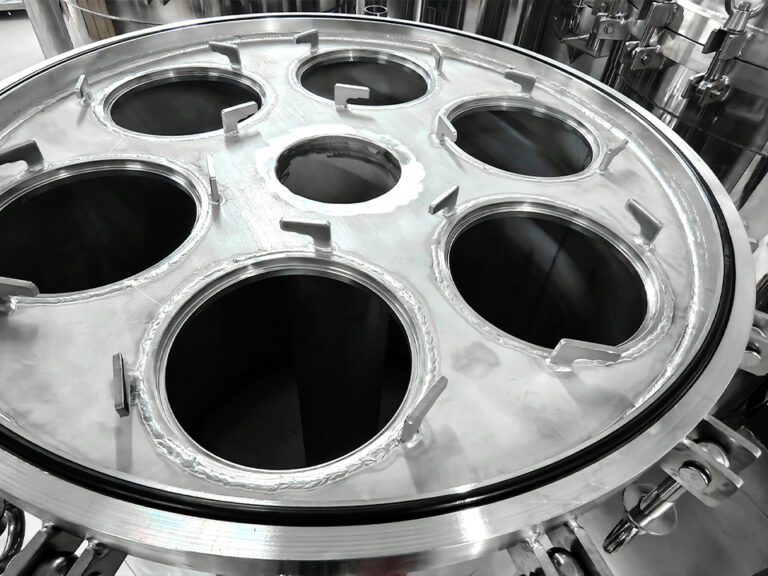
Para obtener un mayor rendimiento, un carcasa de filtro de acero inoxidable para varios cartuchos distribuye el flujo entre varios elementos. Sin embargo, la incorporación de cartuchos adicionales no justifica un diseño hidráulico inadecuado: un flujo irregular, un sellado deficiente de los cartuchos y zonas inaccesibles de la placa tubular pueden seguir comprometiendo el rendimiento.
Filtro «Real Estate Contrast» para la filtración de alimentos de alta viscosidad
Tipo de inmueble
Se adapta perfectamente a
Resistencia a los sólidos
Comportamiento habitual de la caída de presión
Ventaja principal
Peligro principal
Inmuebles de una sola vivienda
Prefiltración de salsas, siropes, aceites y purés
Alta
Se reduce considerablemente cuando está limpio
Procedimiento básico y gran capacidad de retención de polvo
La bolsa se desvía o se colapsa si necesita soporte
Carcasa para varias bolsas
Filtrado grueso de gran volumen
Extremadamente alto
Reducido a modesto
Amplia superficie de filtración
Un enorme retraso en el suministro de productos y una gran preocupación por la higiene
Carcasa para un solo cartucho
Líneas piloto y tarea de pulido
Reducido
Puede subir rápidamente con artículos voluminosos
Retención portátil y controlada
Enmascaramiento prematuro
Espacio para varios cartuchos
Pulido de alto caudal
De bajo a moderado
Menos de un cartucho con el mismo caudal total
Área de filtración ampliable
Estabilidad del sello y carga desigual
Filtro de cesta
Defensa de la bomba y eliminación de partículas resistentes
Extremadamente alto
Bajo, con una malla del tamaño adecuado
Reutilizable y resistente
No es una herramienta de filtración fina
Sector de los componentes sinterizados
Tarea especializada resistente al calor o de uso múltiple
Moderado
Muy dependiente de los medios de comunicación
Resistencia mecánica y facilidad de limpieza posibles
Elevada pérdida por tensión con poros finos
Sistema dúplex
Producción continua
Alta
Confía en los medios de comunicación
Transición sin detener la línea de producción
Muchas más válvulas de cierre, juntas y puntos de limpieza
Tamaño para la tensión diferencial, no para la circulación menor
Esta es la cruda realidad: un valor de caudal sin información sobre el espesor y la caída de presión carece prácticamente de sentido.
Una estimación de cribado estándar que se utiliza a menudo para problemas laminares bien definidos es:
ΔP estimado para un producto viscoso ≈ ΔP de la prueba con agua × espesor del artículo ÷ viscosidad del agua
Se calcula que un cartucho produce una pérdida de presión de 0,05 bar con agua al caudal objetivo. Si el líquido de proceso tiene una viscosidad de 500 cP, una corrección simplificada por la viscosidad da como resultado un valor imposible de 25 bar.
Eso no significa que el sistema definitivo vaya a funcionar realmente a 25 bar. El adelgazamiento por cizallamiento, la geometría de los poros, la circulación reducida, el aumento de la superficie, la temperatura y la hidráulica de los edificios alteran el resultado. Lo que sí indica es que la configuración diseñada para el agua no cumple ni de lejos los requisitos.
Dimensiona el sistema a partir del límite del procedimiento, en sentido inverso:
Presión diferencial limpia máxima permitida
Tensión diferencial máxima admisible en condiciones de suciedad
Caudal requerido al nivel mínimo de temperatura del producto
Presión de la bomba disponible de inmediato
Colapso de elementos o limitación de explosiones
Presión de diseño de la carcasa
Ajuste del dispositivo de alivio
Duración admisible del lote
Coloca indicadores de presión o transmisores a ambos lados de la instalación. Un manómetro de entrada ofrece muy poca información, ya que la presión aguas arriba puede aumentar por factores ajenos al filtro.
Y especifica la restricción de sustitución. “Sustituir cuando el caudal disminuya” no es un método de control.
Diseño sanitario: la facilidad de limpieza es el requisito fundamental
La mejor carcasa de filtro para alimentos viscosos no es necesariamente aquella que presenta la caída de presión más asequible. Es aquella que mantiene un caudal aceptable y, al mismo tiempo, permite el vaciado completo, la inspección y la limpieza en las condiciones reales de funcionamiento de la planta.
Sin duda, consultaría esta información antes de hablar del precio:
Recubrimiento de la superficie interior expresado numéricamente en µm Ra
Esmerilado de soldaduras, pulido y documentación
Asistencia para componentes sin ranuras
Ajuste del desagüe en el punto más bajo real
Ajuste de la salida de aire en el pico real
Facilidad de limpieza de la tapa y el cierre
Geometría de la ranura de sellado
Cuerdas internas o muelles visibles
Ramales muertos alrededor de los medidores y los puertos de muestra
Superficies horizontales que mantienen el producto
Capacidad para inspeccionar los lados sucios y limpios
Compatibilidad con los procedimientos de limpieza in situ o fuera de la instalación
La empresa 3-A Sanitary Criteria establece criterios relativos a los equipos y al diseño higiénico en todos los sectores de procesamiento de alimentos y productos lácteos. El hecho de que un distribuidor mencione el “estilo 3-A” no equivale a presentar una prueba de conformidad, una autorización o una revisión del diseño. Pregunte específicamente qué criterio, revisión, elemento y caso de acreditación se aplica.
No hay lugares donde esconderse.
Cuando se acumula puré inmobiliario debajo de una placa tubular o se acumulan depósitos de proteínas detrás de una junta mal prensada, el problema no es meramente estético; acaba convirtiéndose en un riesgo recurrente para la higiene que los operarios deben controlar de alguna manera a lo largo de cada ciclo de producción.
¿Aceptarías esa incertidumbre en una línea de productos listos para el consumo?
Filtro de acero inoxidable 304 frente a 316L: el sector inmobiliario
El acero inoxidable SUS304 suele ser adecuado para alimentos poco agresivos, con bajo contenido en cloruro, y para tareas de limpieza reguladas. El acero inoxidable SUS316L contiene molibdeno y, por lo general, ofrece una resistencia mucho mayor a la corrosión por picaduras y en hendiduras, especialmente en entornos donde hay iones de cloruro, componentes ácidos, sal o ciclos de limpieza agresivos.
Sin embargo, la etiqueta de la aleación es solo el principio.
Un “inmueble 316L” podría seguir teniendo elementos de fijación de 304, una cesta sin identificar, material de relleno de soldadura no trazable o elastómeros que dejen de funcionar durante el proceso. Solicita una rutina para las piezas en contacto con el fluido en lugar de fiarte de la designación del recipiente principal.
Comprueba la compatibilidad con:
Valor del pH
Concentración de NaCl y exposición directa al cloruro
Ácidos orgánicos, como el ácido acético o el ácido cítrico
Productos químicos de limpieza como el NaOH
Productos químicos para el enjuague ácido, incluidos los sistemas con HNO₅ o ácido fosfórico
Temperatura máxima de limpieza
Tiempo de contacto
Tensiones, grietas y zonas estacionarias
La documentación sobre la pasivación podría ser ideal una vez finalizada la construcción. El electropulido puede mejorar las características de la superficie; sin embargo, no puede subsanar una geometría negativa, una penetración insuficiente de la soldadura o un tubo de desagüe que descanse sobre el fondo del depósito.
La clasificación en micras no constituye un requisito completo de eficiencia
“100 micras” parece una medida precisa. Sin embargo, a menudo no lo es.
Los valores nominales pequeños indican un nivel de retención aproximado según el método de ensayo del fabricante. Los valores absolutos suelen estar vinculados a un rendimiento definido o a una conexión máxima de partículas; sin embargo, los proveedores utilizan estos términos de forma inconsistente. Solicita el método de ensayo concreto, el material de barrera, la viscosidad del líquido, el caudal, el rendimiento y la presión diferencial.
A continuación, identifica qué es lo que el filtro está destinado a eliminar:
Piezas de acero
Piezas de polímero resistentes
Huesos o piel de fruta
Aglomerados de sabor
Partículas de gel
Fibras
Polvo sin disolver
Char
Hueso
Trozos de foca
Defectos estéticos generales
Se trata de diversos riesgos y problemas. Un gel blando de 500 µm puede deformarse a través de una abertura que mantiene un cordón rígido de 500 µm. Una fibra larga puede obstruir una pantalla resistente. Una partícula de acero densa puede depositarse en las tuberías en lugar de llegar al filtro.
La FDA especifica que las retiradas de productos alimenticios pueden deberse a la presencia de vidrio, metal, plástico, bacterias, sustancias irritantes y otros tipos de contaminación. En su documento de orientación sobre la presencia de partículas metálicas se señala que se han respaldado medidas reguladoras en el caso de fragmentos de acero duros o afilados de entre 7 y 25 mm aproximadamente, si bien los fragmentos más pequeños también pueden causar lesiones a los consumidores vulnerables.
La retirada del mercado de Perdue Foods del 16 de agosto de 2024 afectó a unas 167 171 libras adicionales de productos de pollo congelados listos para el consumo, tras detectarse restos de un cable metálico incrustado. No se trataba de un caso de filtración de líquido viscoso, y no sería fiable afirmar que una carcasa de filtro por sí sola lo habría evitado con toda seguridad. Sin embargo, sí pone de manifiesto la magnitud económica de un fallo en la detección de riesgos físicos, y explica por qué la purificación, los sistemas de detección, los imanes, la detección de metales, la inspección por rayos X, el mantenimiento de los equipos y la evaluación de reclamaciones deben funcionar como un sistema integrado.
Cuándo conviene utilizar un filtro de cesta o un sistema por etapas
En el caso de productos pastosos, de granulometría gruesa o muy contaminados, colocar un cartucho grande justo después del recipiente de proceso suele ser una mala práctica de ingeniería.
Una configuración como la presentada podría utilizar:
Filtro de cesta de gran grano
Filtro de bolsa sanitario
Cartucho de gran calidad u otra etapa de pulido
A Filtro de cesta de acero inoxidable SUS304 o 316L Puede proteger las bombas y los medios situados aguas abajo de los residuos de gran tamaño. Debe considerarse como una protección básica, y no debe calificarse automáticamente como un control de microorganismos o de partículas finas.
Invertir en gastos con mucha más antelación. Aún así, puede resultar más económico, ya que la herramienta de precisión dura mucho más tiempo, el flujo se mantiene constante, los operarios realizan menos cambios de emergencia y la producción desperdicia mucho menos producto durante cada tratamiento.
Imaginemos una planta teórica que debe elegir entre una única carcasa de filtro fino y un sistema por etapas que le costaría $2.000 o incluso más. Si el diseño más económico provoca una parada adicional de 45 minutos cada semana, desperdicia 40 kg de producto por cada cambio de cartucho y consume cuatro veces más cartuchos, el ahorro en inversión es pura fachada. La pérdida operativa es la cifra real.
CIP, Transición y Sanación del producto
Una vivienda que tiene un buen sistema de ventilación, pero que se tarda dos horas en ordenar, no es una vivienda de alto rendimiento.
En el caso de productos viscosos, comprueba si los dispositivos pueden:
Tubos de desagüe por gravedad sin necesidad de sacar el agua manualmente con un cubo
Debe ser desplazado con agua u otro fluido autorizado
Aprobar los tratamientos de limpieza con rascador o de recuperación de producto
Dirigir el flujo del CIP en la dirección requerida
Aplicar el producto de limpieza tanto en la superficie del lado sucio como en la del lado limpio.
Evitar la formación de bolsas de aire durante la circulación
Comprueba la conductividad o los parámetros químicos del último enjuague
Se puede abrir sin que el producto en conserva se derrame en el suelo
Evitar que los conductores toquen las superficies limpias que están en contacto con el producto
Los sistemas móviles pueden resultar útiles para pruebas, producción estacional, reelaboración y tareas de filtrado compartidas. Uno de los suministrados sistema de filtrado móvil de acero inoxidable Se explica mediante las configuraciones de filtros de bolsa 40AM, 80AM, 40AST y 840AST, así como los planos opcionales de la bomba neumática de diafragma PW25/50. Dicha información sirve como punto de partida; sin embargo, la viabilidad higiénica del conjunto completo —que incluye tuberías, componentes internos de la bomba, instalaciones, ruedas, controles y capacidad de drenaje— aún debe ser evaluada. (Título del sitio)
Que sea portátil no significa que sea higiénico.
Las preguntas sobre compras que los distribuidores esperan que no hagas
Envía estas preguntas junto con cada solicitud de presupuesto:
¿Cuál es el caudal garantizado con el espesor, la temperatura, las toneladas de sólidos y la presión diferencial objetivo que hemos especificado?
¿El cálculo del presupuesto se basa en el consumo de agua?
¿Cuál es la presión máxima de trabajo y la presión de prueba de la carcasa?
¿Qué valor de presión se utiliza a la temperatura máxima de la intervención?
¿Cuáles son las limitaciones en cuanto al colapso de los componentes y al desvío del sellado?
¿Qué piezas en contacto con el líquido son de acero inoxidable 304, 316 o 316L?
¿Pueden facilitar certificados de materiales para todos los componentes metálicos en contacto con el líquido?
¿Qué valor de acabado de la superficie interior se garantiza?
¿Se facilitan planos de soldadura, registros de pasivación e informes de inspección?
¿Qué certificaciones de aptitud para el contacto con alimentos existen para los medios filtrantes y los elastómeros?
¿Es posible evaluar visualmente todas las superficies que entran en contacto con el producto?
¿Se puede vaciar completamente la carcasa en la posición en la que está instalada?
¿Cuánto producto queda después del drenaje por gravedad a través de las tuberías?
¿A qué se refiere el «volumen de vivienda limpia»?
¿Cuál es el procedimiento recomendado para cambiar un elemento?
¿Se puede abrir la tapa de forma segura tras la liberación de presión?
¿Existe algún enclavamiento mecánico o algún indicador de tensión positiva?
¿Qué juntas y cestas de repuesto se incluyen?
¿Cuál es la preparación que se espera de los internos suplentes?
¿Asistirá el distribuidor a una prueba del producto en la que se utilice la solución original?
Un proveedor competente responderá con presupuestos, planos, certificados y condiciones. Uno poco competente se limitará a enviar un folleto llamativo y a repetir el caudal máximo de agua.
Una matriz de elección práctica
Califica a cada candidato del 1 al 5 y multiplica la puntuación por la ponderación recomendada.
Aspecto de la opción
Ponderación recomendada
Qué debería indicar una puntuación de 5
Flujo a viscosidad real
20%
Verificado mediante estimación o prueba práctica del producto
Diseño higiénico
20%
Drenable, inspeccionable, con control de grietas, documentado
Capacidad de retención de sólidos
15%
Se ha completado todo el lote sin que se haya producido una disminución inaceptable del caudal
Limpieza y transición
15%
Se ha confirmado la limpieza, con una duración y una pérdida de artículos aceptables.
Compatibilidad de materiales
10%
Se han registrado todos los metales y elastómeros en contacto con el líquido
Rendimiento en materia de retención
10%
La técnica de análisis y su eficacia se ajustan al objetivo de eliminación
Seguridad y protección de los conductores
5%
Desahogo seguro, apertura, entrenamiento y gestión de aspectos
Gastos a lo largo del ciclo de vida
5%
Incluye los soportes, la mano de obra, el tiempo de inactividad, los residuos, los ahorros y las energías
No adjudicaría el contrato al mejor presupuesto sin más. Cualquier candidato que no respete los principios de diseño higiénico, la seguridad o la compatibilidad del producto deberá ser descartado, independientemente del coste.
Preguntas frecuentes
¿Cuál es el filtro más eficaz para alimentos viscosos?
El sistema de filtrado más eficaz para alimentos viscosos es un recipiente sanitario, diseñado para soportar presión, con suficiente superficie de filtrado abierta para mantener la circulación deseada con la viscosidad real del producto durante su funcionamiento, al tiempo que permite un drenaje completo, una limpieza contrastada, un cambio rápido de los elementos filtrantes y una compatibilidad documentada con el alimento, la temperatura, las juntas y los productos químicos de limpieza.
En el caso de los productos con alto contenido en sólidos, esto suele implicar el uso de una bolsa de contención o un sistema escalonado de cesta y bolsa. Para tareas de pulido con menor contenido en sólidos, puede resultar más adecuado un sistema de cartuchos múltiples.
¿Qué es mejor para los fluidos viscosos: un filtro de mangas o un filtro de cartuchos?
Un filtro de mangas suele ser más adecuado para líquidos viscosos que contienen un alto contenido en sólidos, fibras, pulpa o partículas deformables, ya que ofrece una vía de circulación relativamente abierta y una capacidad de retención de impurezas considerable, mientras que un filtro de cartucho suele ser más adecuado para el clarificado de líquidos con bajo contenido en sólidos, en los que se requiere una retención más estricta y repetible, así como un rendimiento definido del medio filtrante.
La elección ideal depende de la caída de presión, la longitud establecida, el tipo de impurezas, la periodicidad del cambio de filtro y la claridad requerida del producto, y no solo del valor en micras.
¿Debería elegir un filtro de acero inoxidable 304 o 316L?
Por lo general, se prefiere utilizar filtros de acero inoxidable 316L cuando el producto o el proceso de limpieza contienen cloruros, sal, ácidos agresivos, temperaturas elevadas o problemas persistentes de corrosión intercrestal, mientras que el 304 puede ser adecuado para productos menos agresivos y productos químicos de limpieza regulados, siempre que una evaluación documentada de los materiales verifique una resistencia adecuada a la corrosión.
Defina todos los componentes en contacto con el fluido, incluidos cestas, resortes, elementos de fijación, accesorios para tuberías de desagüe, válvulas y material de soldadura. No utilice la expresión “construcción en acero 316L” como alternativa a una lista completa de materiales.
¿Cómo se calcula el tamaño de la carcasa del filtro para un producto alimenticio viscoso?
Las dimensiones de la carcasa del filtro se calculan determinando el espacio de filtración necesario para garantizar la circulación requerida a la temperatura de funcionamiento más baja del equipo, la viscosidad real, la cantidad prevista de sólidos y la tensión diferencial permitida; a continuación, se incluye espacio suficiente para tener en cuenta la acumulación de residuos, el tiempo de reposo, las variaciones de fabricación y un margen de seguridad por debajo de los límites de presión del equipo, la bomba, los sellos y los componentes.
Las clasificaciones del caudal deben transformarse utilizando ajustes de viscosidad verificados o, idealmente, mediante un análisis representativo de los productos. Los productos no newtonianos suelen requerir datos reológicos, en lugar de un único valor de cP.
¿Qué tamaño de poro en micras se debe utilizar para la purificación de salsas?
El tamaño de malla adecuado para la filtración de salsas es el de mayor abertura o la calidad de medio que elimine de forma fiable las partículas indeseadas definidas sin eliminar la pulpa, las especias, los elementos de textura, los pigmentos ni los sólidos que aportan sabor, al tiempo que se mantiene una presión diferencial adecuada y se completa el lote requerido antes de la limpieza o la sustitución del filtro.
Empieza por determinar el contaminante real y el tamaño de partícula de referencia. No empieces con una cifra aproximada de 50, 100 o 200 µm copiada de otra línea de producción de salsas.
Especifica el proceso antes de solicitar la tarifa
Un presupuesto detallado para la filtración de productos alimenticios de alta viscosidad debe incluir la viscosidad del producto a la temperatura correspondiente, el caudal, la cantidad solicitada, la descripción de los sólidos, el grado de retención deseado, la información sobre la bomba, la presión diferencial permitida, el material de fabricación, la elección de las juntas, el acabado superficial, el tratamiento de limpieza y la documentación necesaria.
Envía las condiciones reales. Necesito el cálculo. A continuación, compara el filtro sanitario propuesto con el producto real, no con un cubo de agua.